
Spider Solitaire history gives players an engaging window into why Spider Solitaire continues to captivate millions of minds around the world every single day. Whether you are solving on a crowded morning train, taking a quiet lunch break at your desk, or winding down before sleep, a single puzzle session offers a rare moment of clean focus in a noisy digital environment. On Solitaire Spider Online, the goal is always to connect curious puzzle lovers with both entertaining stories and practical habits that make the next round more satisfying.
You can jump straight into a fresh grid right now on the Solitaire Spider Online playable main page. If you enjoy exploring a broader variety of classic daily challenges across different genres, be sure to visit Easy Daily Puzzle or browse the full collection of Spider Solitaire puzzles on Easy Daily Puzzle.
Spider Solitaire history: the story and cultural journey of Spider Solitaire
Spider Solitaire traces its documented lineage back to 1949, when game authority Ely Culbertson published its complex rules in Culbertson’s Hoyle. The game earned its evocative arachnid name from its distinctive layout of eight tableau columns, mirroring the eight legs of a spider spinning its web. Played originally with two standard decks of cards, the game was a challenging, space-consuming table exercise for dedicated patience enthusiasts. Its modern ubiquity arrived in 1998, when Microsoft bundled Spider Solitaire into the Windows 98 Plus! package, followed by permanent inclusion in Windows Me and XP. That desktop inclusion introduced hundreds of millions of office workers and home computer users to its deeply satisfying balance of card reveals and spatial planning.
Understanding this background enriches how we view Spider Solitaire history on modern screens. What began as a quiet physical pastime on paper or wooden tables has successfully reinvented itself across generations without losing its core identity. Every move, placement, or clue decoded today connects back to that rich tradition of patient problem solving. When players recognize the origins and milestones of their favorite games, everyday sessions feel less like isolated digital clicks and more like participating in a living, centuries-old worldwide community of puzzle enthusiasts.
Historical records and trusted sources behind Spider Solitaire history
Reliable research helps separate popular mythology from documented puzzle history. For readers who want to verify historical records, competition rules, or archival articles, authoritative resources such as Bicycle Cards official Spider Solitaire rules and David Parlett on historical patience card games offer deep factual context on how these pastimes matured into international standards. Consulting primary sources ensures that we appreciate both the creators and the vibrant communities who keep these games flourishing. Whether exploring competition archives, original patent documents, or early newspaper syndication records, solid evidence reminds us that thoughtful design stands the test of time.
How Spider Solitaire history transforms player choices in real games
Imagine a tableau with several tempting moves and one freshly cleared empty column. The hasty play is parking a random mixed stack into that lane just to tidy up the board. Using Spider Solitaire history teaches you to ask what that empty column can accomplish: will it uncover a hidden face-down card or help untangle a broken suit run? Preserving your open columns and delaying stock deals until the tableau is fully squeezed is the secret to elevating your win rate.
Spider is a game of tempo and spatial mobility. Treating empty columns as dynamic workbenches rather than static storage closets completely changes your command of the cards. By staging short sequences across multiple open lanes, you can systematically dismantle mixed stacks and restore pure single-suit runs that clear cleanly.
Essential player habits connected to Spider Solitaire history
- Prioritize actions that reveal face-down cards over moves that simply organize visible cards.
- Guard empty columns carefully to use them as temporary transfer stations.
- Treat mixed-suit sequences as temporary scaffolding to be repaired into single-suit runs.
- Exhaust every viable tableau transfer before clicking the stock for ten fresh cards.
Why visual clarity enhances Spider Solitaire history
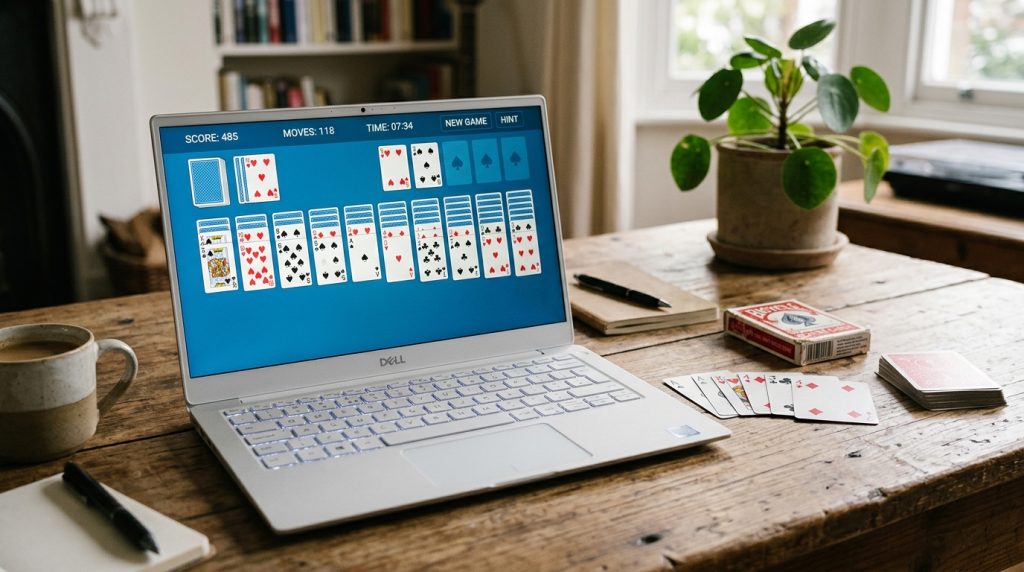
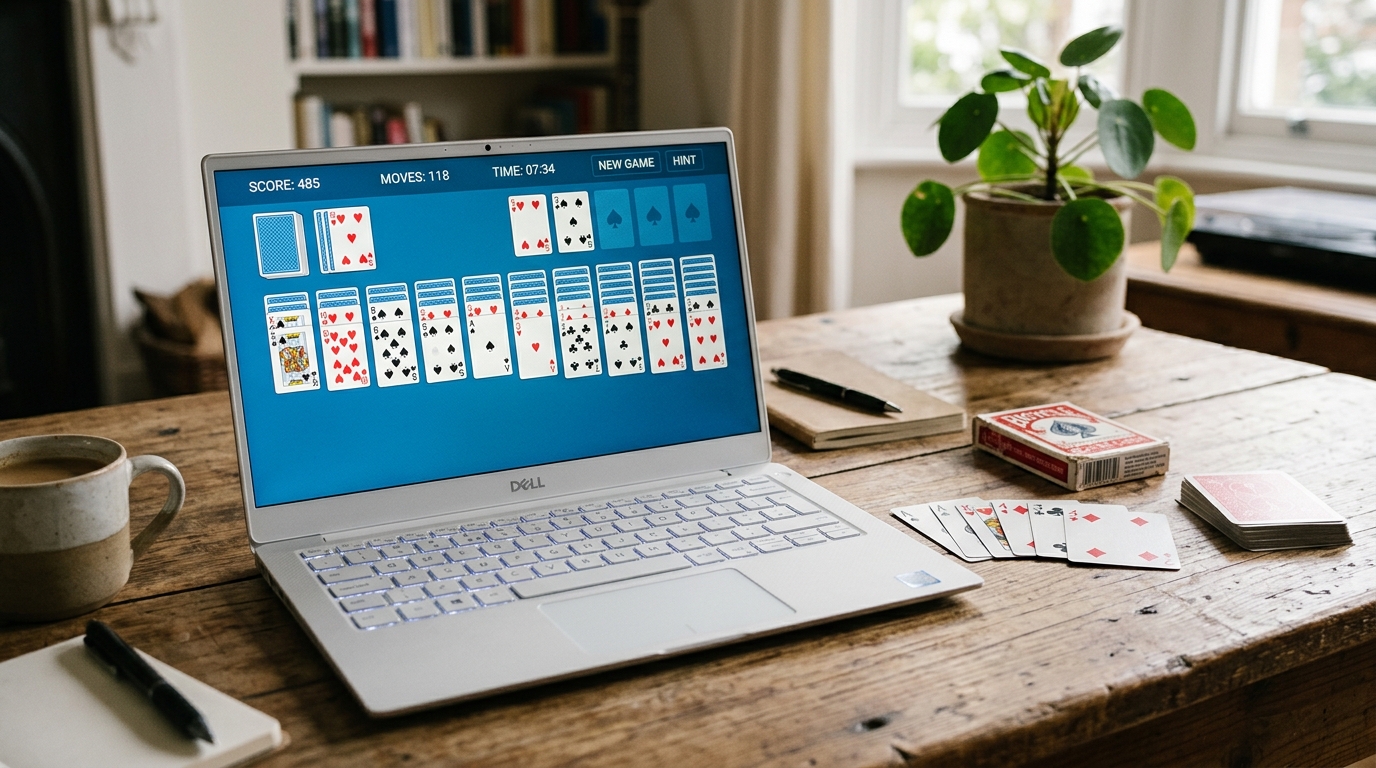
A clean visual presentation makes all the difference when enjoying Spider Solitaire online. The featured illustration accompanying this article is chosen to highlight the focused atmosphere of play, free from distracting clutter or confusing brand marks. Having an accurate visual reference paired with descriptive alt text celebrating Spider Solitaire history ensures that readers can immediately grasp the game state and follow along comfortably. Whether on desktop monitors or mobile screens, crisp contrast and uncluttered design help keep your attention centered on the puzzle itself.
Taking your next step with Spider Solitaire history
The most rewarding way to experience the benefits of Spider Solitaire history is to test these insights in an actual round today. Head over to Solitaire Spider Online to enjoy a relaxing session with fresh perspective, focusing on deliberate choices rather than rushing the clock. Whenever you feel like broadening your horizons with crosswords, jigsaws, or classic card games, explore the Easy Daily Puzzle game library for endless daily variety. Great puzzle solving is not about chasing frantic records; it is about the quiet satisfaction of bringing order to a scattered board, one thoughtful move at a time.